FIGIEFA’s 70th Anniversary Conference highlights the Automotive Aftermarket’s role in Europe’s industrial renewal
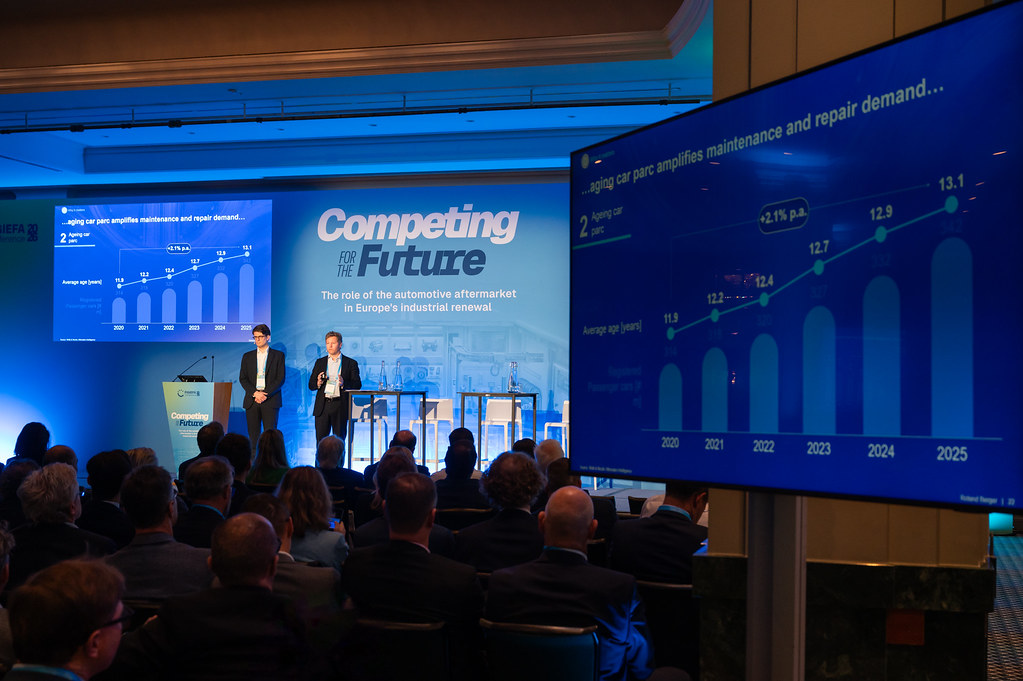
Europe’s industrial and automotive future will be shaped not only by vehicle manufacturing, but also by the vast Aftermarket ecosystem that keeps vehicles operating, sustainable, innovative and affordable throughout their lifecycles. This was the central message of FIGIEFA’s 70th Anniversary Conference, which brought together over 260 participants, including policymakers, industry leaders and automotive aftermarket stakeholders in Brussels.
The conference took place against a backdrop of profound transformation in the automotive sector. Electrification, digitalisation, software-defined vehicles, artificial intelligence, sustainability requirements, growing international competition and geopolitical disruptions are reshaping the industry and prompting a renewed debate about Europe’s competitiveness and industrial strategy. FIGIEFA’s conference explored how the Independent Automotive Aftermarket can contribute to these objectives while continuing to deliver value to consumers, businesses, Europe’s economy and society as a whole.
Opening the conference, Mads Engberg, President of FIGIEFA, emphasised that the future of Europe’s automotive industry extends far beyond the production of vehicles themselves.
“The future of Europe’s automotive industry is not only about manufacturing vehicles. It is also about everything that happens during the many years those vehicles remain on Europe’s roads: maintenance, repair, parts distribution, diagnostics, data services, remanufacturing, digital services and increasingly AI-enabled services.”
He stressed that the Independent Automotive Aftermarket is a vital part of Europe’s industrial backbone, supporting competitiveness, innovation, employment, consumer choice and mobility across the continent.
The conference marked an important milestone for FIGIEFA, which celebrates seventy years of representing independent operators and defending consumer choice and the right to repair in the European automotive market. Looking back on seven decades of engagement for fair competition and a strong Single Market, participants reflected on how the sector has evolved while remaining anchored in these fundamental principles.
A keynote address by Valère Moutarlier, Deputy Director-General of DG GROW at the European Commission, placed the discussion within the wider context of Europe’s competitiveness agenda and the challenges facing European industries in an increasingly complex global environment. His contribution highlighted the Commission’s policies to strengthen industrial resilience, foster innovation and ensure that Europe remains globally competitive in the years ahead.
One of the conference’s central highlights was the presentation of a new study by Roland Berger, examining the Independent Automotive Aftermarket’s value creation and strategic relevance to the European economy. The study reinforced the message that the Aftermarket is not a peripheral activity but an essential component of Europe’s automotive value chain, contributing to economic activity, innovation, employment and long-term industrial strength.
Throughout the day, panellists explored where future value will be created in an increasingly digitalised and technology-driven Aftermarket. During a panel featuring representatives from Temot International, ZF, Jifeline and Cleevely Electric Vehicles, speakers examined how technological change is transforming business models and creating new opportunities across the automotive ecosystem. Discussions highlighted the growing importance of software, data, diagnostics, technical expertise, remote services and collaboration as key drivers of future value creation.
Competition policy and regulation also featured prominently throughout the programme. A keynote by Dr Thomas G. Funke from Geradin Partners on the implications of EU competition law for the Aftermarket demonstrated how competition frameworks, specifically the Motor Vehicle Block Exemption Regulation, must continue to support open markets as vehicles become increasingly connected and software-driven. Preserving competitive access to markets, services and customers remains essential to ensuring innovation and consumer choice.
A dedicated panel focused on the transition from digitalisation to an AI-powered Aftermarket, bringing together representatives from the European Commission, ATR International, Bosch Mobility Aftermarket, Topmotive and SPREAD. Discussions examined the role of data, interoperability, partnerships and governance in enabling the next generation of automotive services. Speakers explored how artificial intelligence can support greater efficiency, enhance vehicle maintenance and diagnostics, and unlock new business opportunities across the Aftermarket.
Participants emphasised that Europe’s ability to benefit from AI will depend not only on technological development, but also on the availability of high-quality data, effective regulatory frameworks and continued collaboration across the automotive ecosystem.
The contribution of the Aftermarket to sustainability and circularity was another key theme. Stijn Vervoort, from the Forum on Automotive Aftermarket Sustainability (FAAS), highlighted the role of repair, maintenance, refurbishment, remanufacturing and extending vehicle lifespan in supporting Europe’s environmental objectives. By enabling vehicles and components to remain in service longer, the Aftermarket plays an important role in reducing waste, improving resource efficiency and supporting a more circular automotive economy.
Reflecting on the challenges and opportunities ahead, Sylvia Gotzen, FIGIEFA’s Chief Executive, closed the event and reiterated that while technologies and business models continue to evolve, the principles underpinning a competitive Aftermarket remain unchanged.
“The technology is changing. The business models are changing. But the principle should not change. Innovation must not become a reason to close markets. Digitalisation and AI should create more opportunities for competition, not fewer.”
As FIGIEFA enters its eighth decade, the conference demonstrated that the future of Europe’s automotive sector will increasingly be shaped by the interaction between industrial policy, competition, digitalisation, artificial intelligence and sustainability. Ensuring that future mobility markets remain open, innovative and competitive will be critical not only for Independent Automotive Aftermarket, but also for consumers, businesses and Europe’s wider economy.